Quick answer
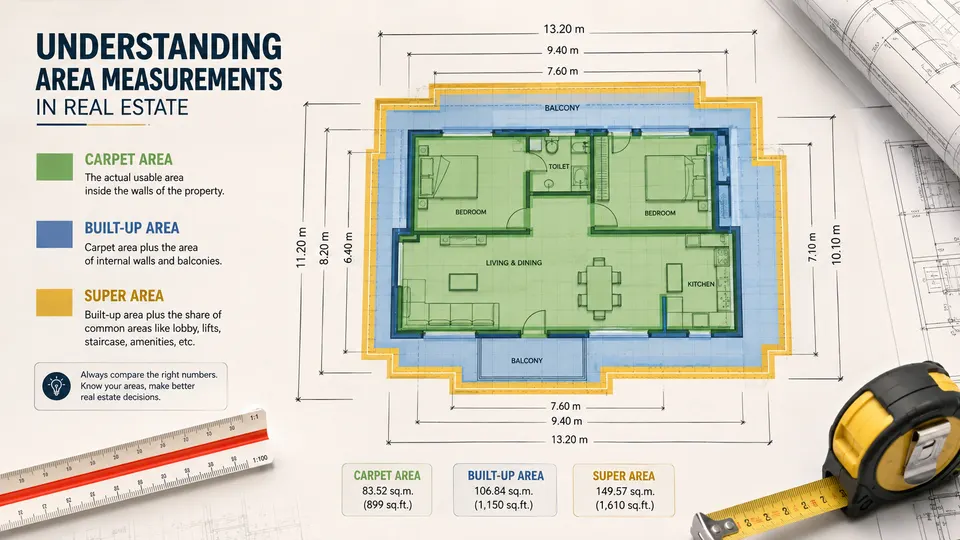
Carpet area is broadly the net usable floor area within an apartment under the applicable RERA definition, with specified inclusions and exclusions. Built-up and super area are market terms that may add walls, balconies, and a share of common areas differently. Compare homes using carpet area, room dimensions, and complete cost.
Area terminology changes the apparent size and price of a home. Two apartments advertised at the same square footage can deliver different usable rooms because one figure is carpet area and the other includes walls or common-area loading. Buyers who compare the wrong denominator may believe a costly home is cheaper per square foot.
This guide explains the practical distinctions without assuming that every seller uses non-statutory terms identically. Always read the project or property documents for the exact definition and measurement.
Carpet area: the main usable comparison
RERA provides a statutory carpet-area definition for covered projects. In practical buying, carpet area is the most useful starting point for comparing internal usable space, subject to the exact legal definition and plan. Ask for a certified or contractual area rather than estimating from a brochure.
Carpet area still does not reveal layout quality. Measure bedroom width, storage, passages, kitchen, utility, bathroom, columns, and furniture circulation. A smaller efficient plan can function better than a larger poorly arranged one.
Built-up area: ask what is included
Built-up area commonly adds wall areas and may include balconies or other components, but usage can vary. Request a calculation or plan legend. Never assume a standard conversion from carpet area.
For a resale property, compare the area in the registered and society records with the physical layout and any alterations. Different documents may use different terminology; your lawyer should reconcile material discrepancies.
Super area and common-area loading
Super or saleable area often allocates a share of common spaces in addition to unit-related built area. The allocation method can vary, so the number is not a direct measure of internal space. A large lobby, clubhouse, or service area can increase loading.
If price is quoted on super area, calculate the total and then divide by carpet area for a more useful comparison. Also compare maintenance calculation because some societies bill using a broader area.
Why percentages and conversions are risky
Sales conversations may offer a generic efficiency percentage. Use it only to ask for evidence, not to select a home. Building design, shafts, walls, balconies, cores, and amenities differ.
Calculate carpet-to-quoted-area efficiency for each unit using documented figures. Then inspect whether the carpet itself is usable. High numerical efficiency with dark rooms or no storage may still be a poor plan.
How area can change price and registration
Separate the commercial rate basis from the legal property description and statutory valuation. Taxes, duties, agreement adjustments, and final measurement can follow specific rules and contracts. Obtain current legal and tax advice.
For under-construction property, read how area variation changes price and what limits or remedies apply. At handover, compare the delivered plan and area documents before accepting a revised demand.
A better comparison method
Use a table with contractual carpet area, balcony or terrace, quoted area, complete price, total cost per carpet square foot, room dimensions, maintenance basis, and plan efficiency. Keep outdoor exclusive areas separate.
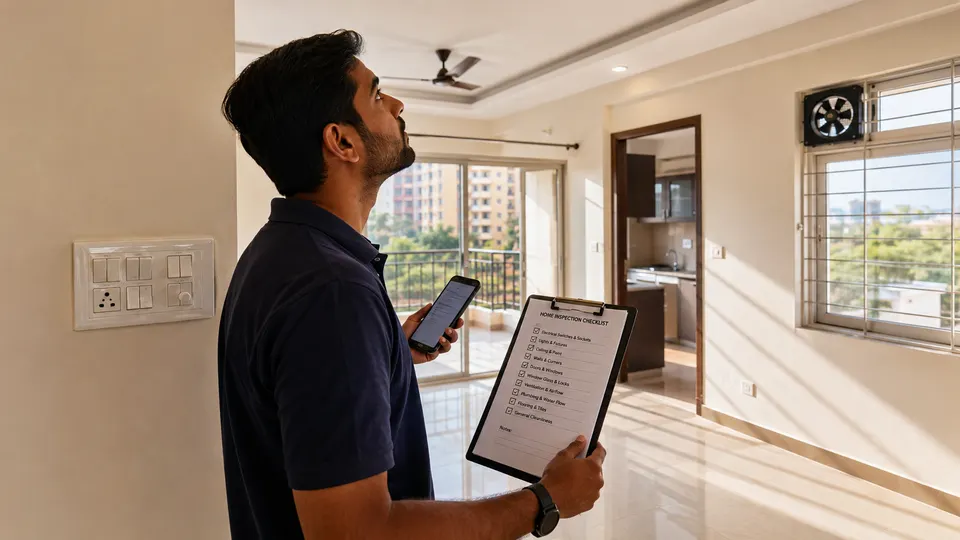
Visit the actual or matching unit with a measuring tool where allowed. Place furniture on the plan to test use. Area is valuable only when it supports daily activities and lawful ownership.
A worked comparison of two apartments
Apartment A is advertised as 1,500 sq.ft and Apartment B as 1,350 sq.ft. Those numbers do not prove that A has more useful space because each project may define super area differently. Obtain the RERA carpet area or contract definition, room dimensions, balcony treatment, and common-area loading. Trace the plan and measure the completed unit where possible.
Suppose A provides 900 sq.ft of carpet area and B provides 920 sq.ft with fewer corridors and better storage. B can function as the larger home despite its smaller headline area. Calculate purchase cost per carpet square foot, but also compare room widths, furniture walls, circulation, ventilation, shaft placement, balconies, and rights in parking or storage. Efficiency is both numerical and lived.
If a seller or broker cannot explain which area a rate uses, do not compare the quoted rate with another project. First convert both properties to complete cost and a consistent usable-area basis. Put the exact area and attached rights in the agreement so the buying decision does not depend on a marketing label whose meaning changes between projects.
Area verification checklist
- Contractual carpet area and plan obtained.
- Built-up and super-area inclusions explained.
- Balcony, terrace, parking, and storage shown separately.
- Complete price divided by documented carpet area.
- Room dimensions and furniture circulation tested.
- Maintenance area basis confirmed.
- Area-change clause and final measurement reviewed.
Frequently asked questions
Is carpet area the same as room area?
Not exactly. The applicable definition determines included internal components. Use the documented carpet figure and room-by-room plan together.
What is a good loading percentage?
There is no universal target. Compare documented efficiency among similar projects and judge the quality and usefulness of common amenities and the internal plan.
Which area should price per square foot use?
State the denominator clearly. For buyer comparison, complete cost per contractual carpet area is usually more informative than a base rate on super area.
Official resources to verify
Final takeaway
Area labels become useful only when they are defined, documented, and connected to the plan. Compare carpet area and actual room utility, then place the complete cost beside it. That removes much of the confusion created by a low rate on a large quoted area.