Quick answer
Read a property cost sheet by separating base price from area basis, floor or location premiums, parking, amenities, maintenance deposits, utilities, taxes, duties, registration, brokerage, finance, and possession charges. Ask which items are compulsory, variable, refundable, financed, and included in the agreement before booking.
A cost sheet can make a purchase look simple by placing one large base amount at the top and many smaller lines below it. Those lines may add materially to the cash required, and some are due at times when a loan will not fund them. The sheet is therefore both a price document and a cash-flow document.
This guide explains how to audit the cost sheet without assuming that every project uses the same terms. The aim is to produce an all-in estimate, identify unclear charges, and make the agreement and payment schedule consistent with what was sold.
Confirm the unit and area basis
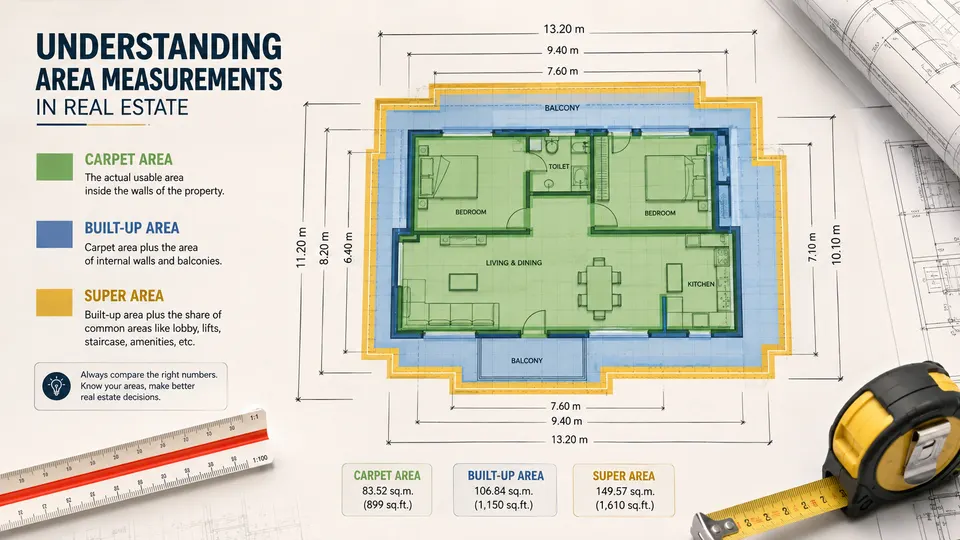
The sheet should identify project, phase, tower, unit, floor, configuration, parking, and relevant area measures. Match them with the plan and booking form. Determine whether the rate is multiplied by carpet, built-up, super, plot, or another defined area.
Compare homes using carpet area and usable layout. Ask how balconies, terraces, common areas, and loading are treated. A lower rate applied to a larger super area may produce a higher total and less usable space than a higher rate applied to a more efficient plan.
Break down price additions
List floor-rise or preference, park or road facing, corner, club, parking, power backup, external development, infrastructure, fire fighting, gas, utility, and any other line exactly as named. Ask the legal basis, calculation, tax treatment, and whether it is compulsory.
Do not accept “standard charge” as an explanation. Ask what service or right the payment buys, when it is delivered, and whether it appears in the agreement. Compare promotions by recalculating the final cost; a waived line can be offset by a higher base rate or another charge.
Separate deposits and recurring expenses
Maintenance advance, security, sinking or corpus fund, club deposit, meter security, and association charges may have different ownership and refund rules. Ask who holds the money, whether interest applies, how it is adjusted, and what receipt or account will evidence it.
Request an estimate of monthly maintenance and what is billed separately—electricity, backup, water, parking, club use, taxes, or consumption. The cost sheet closes the purchase; the recurring statement determines affordability after possession.
Add government and transaction costs
Clarify whether applicable taxes are included or additional and at what stage they are calculated. Estimate stamp duty and registration using current official rules, buyer category, ownership structure, and transaction value. Add legal review, technical inspection, brokerage, loan, insurance, and document expenses.
For a resale transaction, include society or authority transfer, no-dues, loan release, repair, and brokerage. Ask your adviser to check tax-deduction or reporting responsibilities where applicable. Never rely on a sales spreadsheet as tax advice.
Map the payment schedule and loan gap
Place each demand on a timeline: booking, agreement, construction milestones, possession, registration, and handover. Identify the buyer’s margin and what the lender will disburse. Some charges may not be financed, and the bank may disburse against its valuation rather than the seller’s total price.
Model delay and overlap with rent or pre-EMI. Check whether milestones reflect actual progress and what documentation accompanies a demand. Keep money liquid enough for near-term obligations without sacrificing emergency reserves.
Reconcile the cost sheet with the contract
Before booking, ask for draft contractual documents and compare every amount, area, specification, concession, due date, possession representation, and refund term. A spreadsheet marked “indicative” may allow change; understand which figure becomes binding.
Record the expiry and conditions of discounts. Ask how cancellations, delayed payment, area change, statutory change, and final measurement are handled. Obtain signed receipts and updated statements after every payment. The final agreement should not surprise a buyer who carefully read the cost sheet.
Reconcile the numbers with a simple control total
Create four subtotals: property consideration, compulsory project charges, government and transaction costs, and post-possession spending. Add them to one acquisition total, then subtract only discounts that are written, unconditional, and still valid. Keep refundable deposits visible rather than removing them because they still affect cash flow.
Now compare that total with the agreement, payment schedule, lender estimate, and your bank balance timeline. Every difference needs a named explanation. If the salesperson says a charge will be waived later, ask for the revised signed sheet before paying. If a lender will not finance a line, place it on the buyer-funded dates. This reconciliation turns a sales document into a workable closing plan and exposes missing amounts while there is still time to negotiate.
Cost-sheet audit checklist
- Exact unit, phase, floor, parking, and area definitions.
- Base price multiplication checked independently.
- Every premium and compulsory charge explained.
- Deposits separated from non-refundable costs.
- Recurring maintenance and utility treatment estimated.
- Taxes, duties, registration, brokerage, loan, and repairs added.
- Payment dates, financing gaps, and contract terms reconciled.
Frequently asked questions
What is the difference between base price and total price?
Base price usually covers a defined area at a quoted rate. Total acquisition cost adds compulsory preferences, parking, amenities, deposits, taxes, statutory payments, finance, brokerage, and other transaction expenses.
Can the final cost change after booking?
It may change under contractual area adjustments, statutory changes, optional selections, delayed payment, or unclear indicative lines. Review the agreement and cap or clarify variable items before paying.
Should I compare projects by base rate?
No. Compare complete cost, carpet area, possession, specifications, recurring expense, and risk. Base rate alone can be structured to make one offer appear cheaper.
Final takeaway
A cost sheet is trustworthy only when every line has a definition, amount, timing, and contractual home. Recalculate it, add external expenses, map the cash flow, and refuse to treat an unexplained charge as minor simply because it appears below the base price.
Important: Charges and tax or registration rules change. Confirm current figures through official sources and qualified advisers.