Quick answer
Buying a first home in Greater Noida is a sequence: set a safe all-in budget, define the commute and possession need, compare carpet area and recurring costs, verify the project and title, inspect the property, secure suitable finance, document every promise, and complete registration and handover with professional support.
A first home combines an emotional milestone with the largest financial commitment many households make. Greater Noida offers established sectors, newer group-housing projects, resale apartments, plotted homes, and developing corridors. That choice is useful, but it also makes superficial comparison risky because possession, authority, area terminology, services, and neighbourhood maturity vary.
This guide provides a start-to-finish process for 2026 without pretending that one sector or project fits everyone. It emphasises primary documents, current official information, and financial resilience. Use it to organise decisions, then engage qualified professionals for the exact property.
Set an all-in budget that protects normal life
Begin with monthly affordability, not lender eligibility. List stable household income and essential expenses, insurance, education, dependants, transport, existing debt, savings goals, and likely home maintenance. Choose an EMI range that still allows saving and can tolerate rate changes or a temporary income disruption.
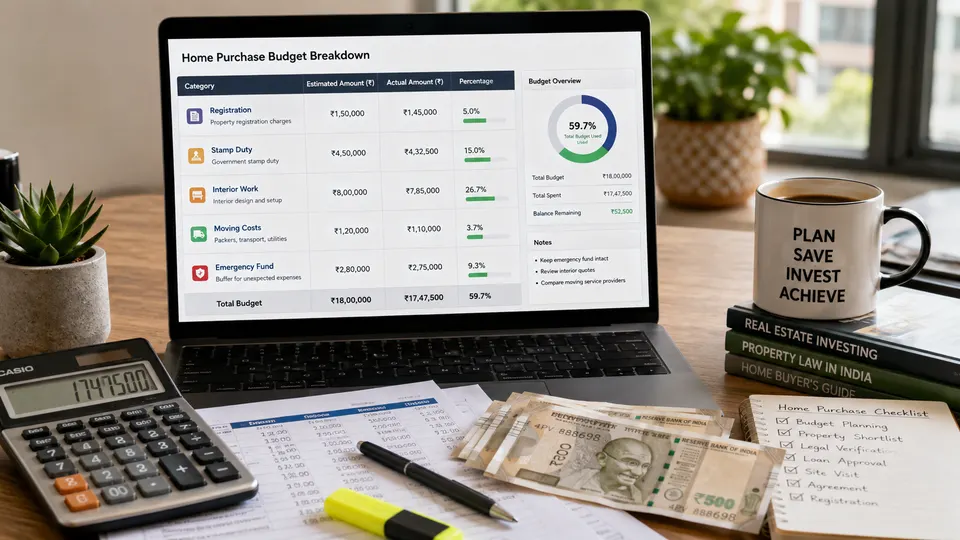
Translate that into an all-in purchase ceiling including duties, registration, brokerage, legal and technical review, loan costs, parking, maintenance deposits, interiors, repairs, and moving. Keep transaction contingency separate from the emergency fund. If the purchase consumes both, reduce the property budget before searching.
Choose the micro-market from daily journeys
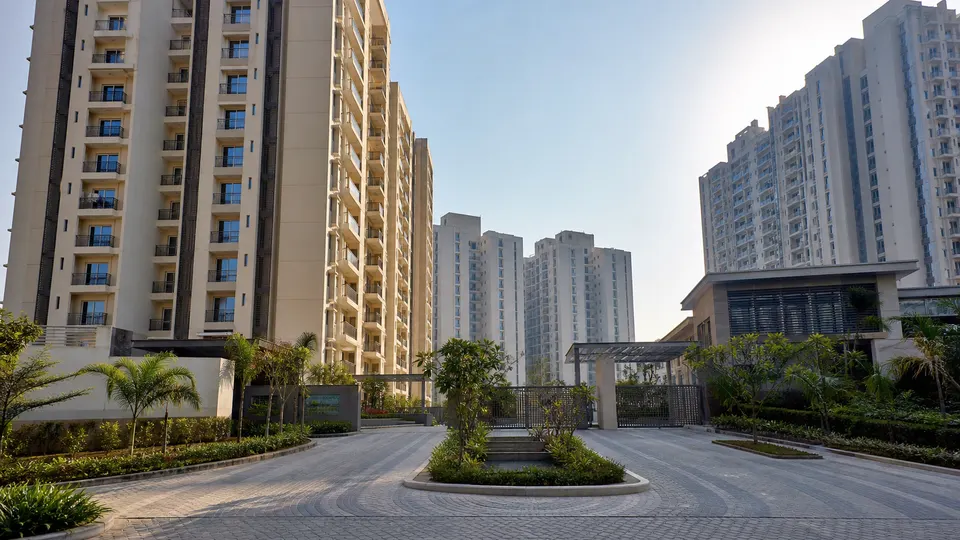
Map workplaces, schools, family support, hospitals, and routine shopping. Test routes at the times you will use them and include the last mile. Noida, Greater Noida, Greater Noida West, and the Yamuna Expressway side can offer different trade-offs in commute, maturity, space, and future construction.
Visit a candidate locality in daylight, after dark, and on a weekday. Observe road condition, drainage, lighting, public transport, active shops, pedestrian access, and ongoing construction. Ask what is operational now and treat future infrastructure as a possible benefit, not a substitute for current liveability.
Decide between ready, resale, and under construction
A ready or resale home allows inspection and near-term use, but may need repairs and a full ownership-chain review. Under-construction property can offer different payment timing and newer specifications, but adds completion, change, and carrying-cost uncertainty. Compare rent plus pre-EMI during any waiting period.
For every option, identify the exact phase, tower, and unit. Confirm possession status in documents rather than advertisements. If the project is RERA-registered, review its official UP RERA record, uploaded disclosures, declared completion, and updates. Ask your lawyer to explain what those records do—and do not—prove.
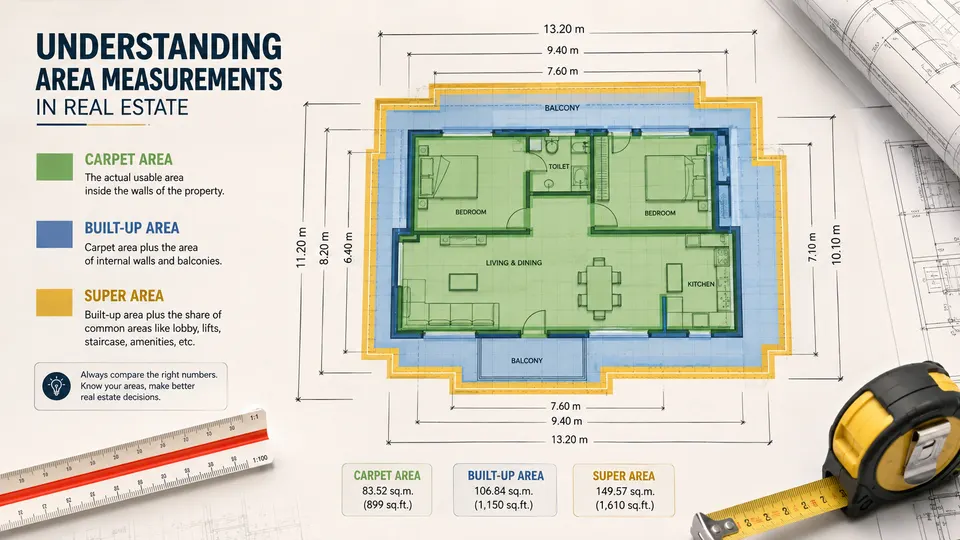
Compare homes using carpet area and total cost
Use carpet area and room measurements to compare usable space. Study layout efficiency, daylight, cross-ventilation, privacy, storage, balcony usefulness, kitchen work area, and accessibility. A larger advertised super area can still produce smaller rooms than a compact, efficient plan.
Request a complete written cost sheet. Record parking, taxes, duties, registration, maintenance, deposits, transfer charges, brokerage, and likely interiors. Compare the final cost per usable area only after these items and property condition are understood. A transparent, slightly higher quote may be safer than a low headline with missing charges.
Complete independent legal and technical checks
Use an independent property lawyer to verify seller authority, title chain, encumbrances, approvals, agreement terms, property description, mortgage, litigation, dues, and registration requirements. For resale, inspect succession or power-of-attorney issues where relevant. For developer sales, ensure promises are captured in contractual documents.
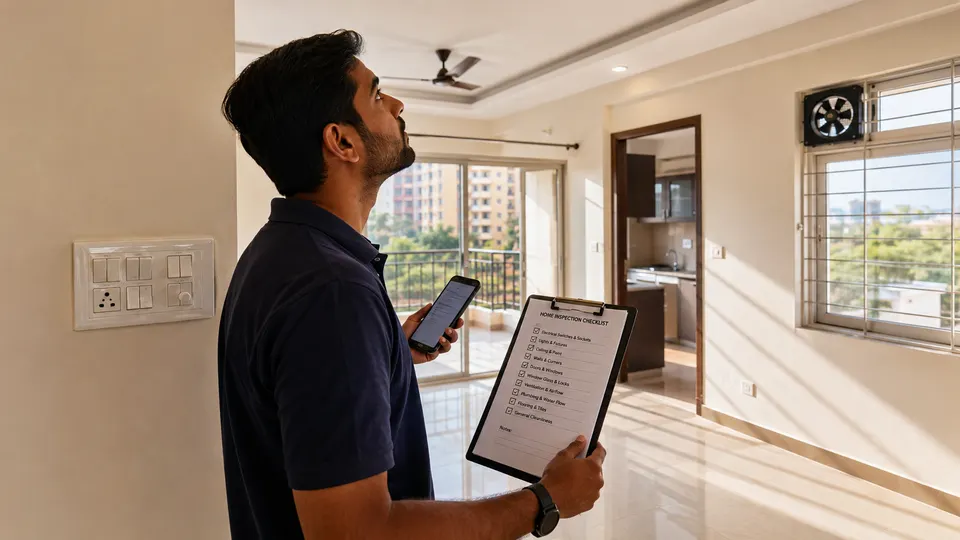
Inspect the actual unit or construction with an engineer or experienced professional when appropriate. Look at structure, seepage, plumbing, electrical systems, fire and lift services, basement, drainage, water, backup, and common areas. Speak with residents without the salesperson present. Price repairs before final negotiation.
Select and manage the home loan
Compare rate type, benchmark and spread, reset rules, tenure, processing, legal and valuation charges, insurance, prepayment, and service. A lower EMI created by a very long tenure can increase total interest substantially. Ask for a written illustration and understand what changes when rates move.
Do not open new credit or make large unexplained transfers during approval. Keep income, bank, tax, identity, property, and source-of-funds documents organised. Coordinate disbursement conditions with the agreement schedule. Loan approval is not a replacement for independent title advice.
Negotiate, register, and take possession carefully
Negotiate from comparable evidence, repair cost, complete payment timing, and document readiness. Price is only one term: possession date, included fixtures, dues, parking, repairs, and default remedies matter. Record every concession and representation in the agreement or a valid annexure.
Before registration, verify the final deed line by line, payment records, identities, property description, ownership shares, and lender coordination. Before handover, complete a snag and inventory inspection, collect keys and access devices, meter readings, warranties, manuals, no-dues evidence, and original documents due to you. Preserve digital and physical copies.
First-home purchase checklist
- Set a safe EMI, all-in ceiling, contingency, and emergency reserve.
- Test locality and commute at real travel times.
- Compare carpet area, complete cost, possession, and recurring expense.
- Verify official project information and exact phase where applicable.
- Commission independent legal and technical review.
- Compare written loan terms and coordinate disbursement.
- Document negotiations, complete a final inspection, and archive records.
Frequently asked questions
How much home can a first-time buyer afford?
Affordability is the price whose EMI and ownership costs fit after essential spending and savings, with reserves for rate changes, repairs, and income disruption. A lender’s maximum eligibility is not a safe personal target.
Is RERA registration enough to approve a project?
No. RERA improves disclosure and provides an official project record, but buyers should still verify title, approvals, agreement, finance, construction, and the exact phase through independent professionals.
When should I pay a booking amount?
Only after identifying the exact property, understanding refund terms, reviewing core documents, and receiving a written payment record. Avoid large non-refundable payments made only to hold a verbal offer.
Official resources to verify
Final takeaway
A successful first-home purchase is not the fastest booking; it is a decision that remains affordable and legally sound after the excitement passes. Work in sequence, verify through primary records, and keep each payment tied to written terms and completed checks.
Important: This is general educational information. Property, lending, registration, and tax requirements change; obtain advice for the specific transaction.