Quick answer
A safe home-buying budget separates the property price from transaction costs, loan costs, possession payments, interiors, repairs, and moving. Build a dated cash-flow plan, obtain written quotations, and keep a contingency so registration or handover does not force high-cost borrowing.
The number negotiated with the seller or developer is only one part of the cash required to own and occupy a home. Buyers are often prepared for the down payment but surprised by statutory charges, processing fees, maintenance advances, utility setup, furniture, appliances, and dozens of smaller moving expenses arriving together.
A good budget does more than total costs. It shows when each amount is due, which payment can be financed, which must come from savings, and what remains for emergencies after moving. This guide provides a practical framework without assuming one universal fee or interior package.
Start with the complete acquisition cost
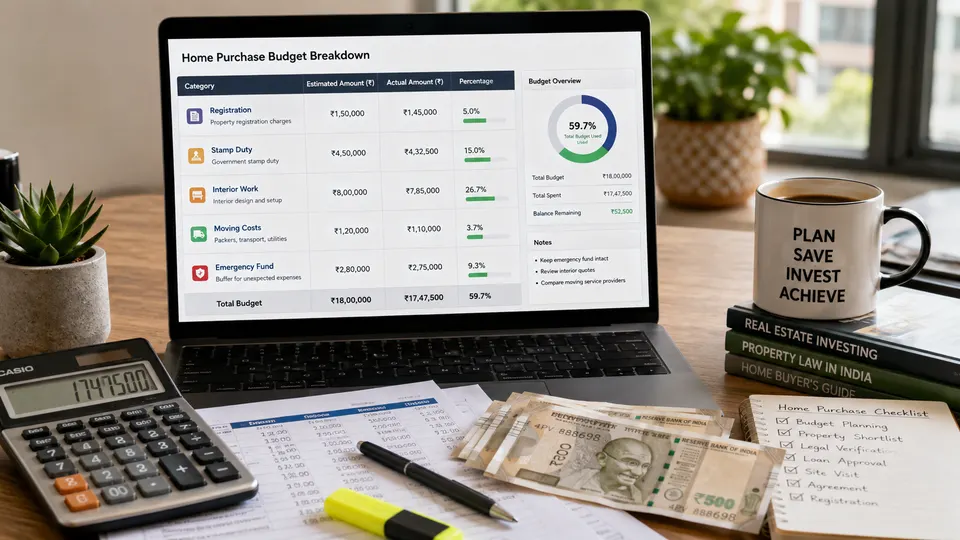
Create separate rows for the agreed property consideration, applicable stamp duty, registration fee, brokerage, legal review, technical inspection, loan processing, valuation, insurance, and any society or authority transfer expense. Rates and concessions can change, so confirm current figures with the official registration system and qualified advisers close to the transaction date.
For a developer purchase, request the complete cost sheet and payment schedule. Identify taxes, parking, club or amenity charges, floor or location preference, power backup, maintenance deposit, meter charges, and possession-linked amounts. Ask which entries are refundable, adjustable, optional, or subject to change. Oral estimates should not be the basis of your financing plan.
Plan cash by date, not only by category
A total budget can still fail if several payments fall in the same month. Add expected dates for booking, agreement, loan margin, construction milestones, registration, possession, interior advances, final contractor payment, and moving. Mark the source of each payment: savings, sale proceeds, provident-fund withdrawal if permitted, loan disbursement, or current income.
Keep money needed in the near term in an appropriately liquid form. Do not assume an investment can be sold immediately at its displayed value. If your purchase depends on selling another property, include brokerage, tax advice, documentation, and a delay buffer. Coordinate the loan disbursement process early so a missing document does not trigger late charges.
Build an interior budget from rooms and priorities
Divide work into essential before move-in, useful within the first year, and optional later. Essential items may include safety repairs, electrical work, plumbing, basic lights, fans, kitchen usability, window coverings, locks, and necessary storage. This prevents decorative upgrades from consuming money required for functional work.
Ask contractors for itemised scope, material specifications, taxes, labour, transport, debris removal, timeline, payment milestones, and warranty. Clarify whether appliances, hardware, civil changes, design fees, and site supervision are included. Compare quotations on the same scope; a low lump-sum quote is not comparable if it omits fittings or post-work cleanup.
- Measure the actual home before ordering modular furniture.
- Check society work-hour, lift, debris, and contractor-entry rules.
- Retain a final payment until agreed defects are corrected.
- Avoid structural or external changes without required approvals.
Budget for the move and first month
Moving costs include packing, transport, insurance for valuable items, dismantling and reassembly, temporary storage, cleaning, pest control, utility setup, broadband installation, and leave from work. If possession and move-out dates do not align, include overlapping rent or temporary accommodation.
The first month often brings purchases that were too small to appear in the main estimate: ladders, extension boards, bathroom fittings, curtains, cleaning supplies, duplicate keys, delivery fees, and minor repairs. Set a fixed settling-in allowance rather than using credit casually. Delay non-essential décor until you understand how the rooms are actually used.
Create a contingency for unknowns
Contingency is not spare money for upgrades. It protects the plan against measurement changes, hidden seepage, price variation, delayed possession, extra rent, lender conditions, or replacement of an appliance that cannot be repaired. The percentage should reflect uncertainty: a lived-in resale home or extensive renovation generally deserves more buffer than a limited furnishing job.
Keep the contingency separate from the emergency fund that protects your household after the purchase. If the deal uses both reserves, it is probably larger than your finances comfortably support. Re-scope interiors, negotiate timing, or choose a lower acquisition cost instead of relying on future income that is not guaranteed.
Track actual spending and control changes
Use one sheet with budget, committed amount, amount paid, due date, vendor, invoice, and variance. Record every change in scope before work begins. Small upgrades requested across multiple rooms can create a large overrun, especially when they require rework.
Preserve receipts, bank records, contracts, warranties, and photographs. These help with tax records, insurance, warranty claims, future resale disclosures, and disputes. Pay through traceable channels and avoid large undocumented cash requests. A controlled budget is also a document trail.
Home-purchase cost planner
- Confirm current statutory charges using official sources.
- Obtain a complete written property cost sheet.
- Map every payment to a date and funding source.
- Separate essential interiors from later upgrades.
- Compare contractors using an identical itemised scope.
- Allow for moving, overlap, utilities, and first-month purchases.
- Keep both a project contingency and a household emergency reserve.
Frequently asked questions
How much should I keep aside beyond the property price?
There is no safe universal percentage because statutory charges, brokerage, condition, furnishing level, and location differ. Build an itemised estimate using current official rates and written quotations, then add a contingency based on uncertainty.
Can interior costs be included in a home loan?
Products and eligibility vary by lender. Ask what is financed, when it is disbursed, what invoices or inspections are required, and how the additional borrowing changes EMI and total interest before assuming it is available.
When should interiors begin?
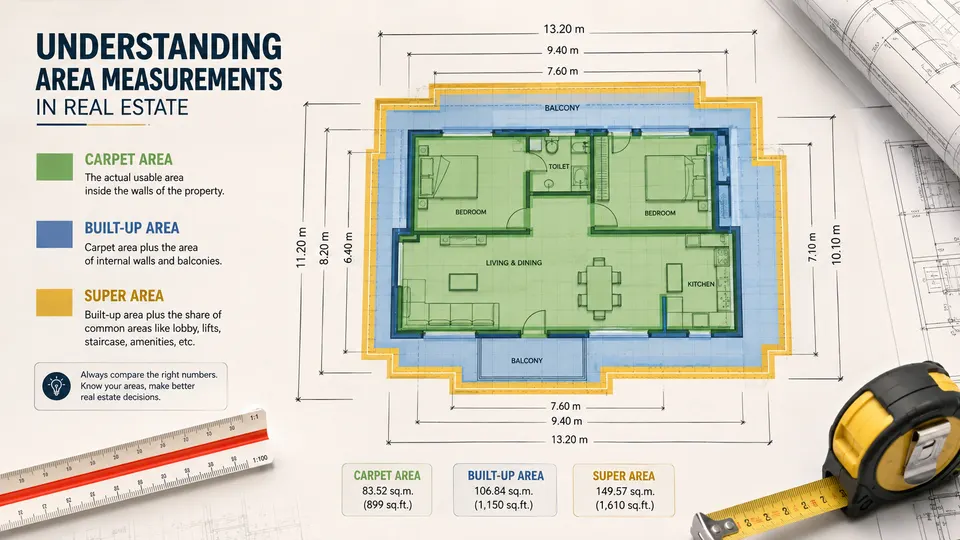
Begin only after lawful possession, measurement access, society permissions, and clarity on defects that the seller or developer must address. Ordering from a sample plan before measuring the delivered home can cause expensive rework.
Final takeaway
A realistic buying budget follows the money from agreement to the first comfortable month in the home. Itemise the full transaction, schedule the cash, prioritise functional interiors, and protect separate reserves. That discipline makes the purchase less stressful and reduces the chance that a beautiful home begins with avoidable debt.
Important: Statutory charges, lender rules, and tax treatment can change. Confirm current requirements with official authorities and qualified legal, tax, and financial professionals.