Quick answer
Evaluate a builder by matching promises with completed and ongoing projects, official RERA disclosures, delivery history, construction quality, complaint handling, financial and legal signals, and resident experience. Review the exact project company and phase—not only the parent brand—and put every material promise into the agreement.
A polished sales centre shows what a developer wants a buyer to see. Track-record research asks what happened after earlier customers paid: Was possession delivered? Were plans and amenities completed? How were defects handled? Did the legal entity honour written commitments?
The goal is not to find a developer with no complaints. Large builders serve many customers and disputes can occur. The useful question is whether problems are isolated or systematic, how transparently they are reported, and whether the organisation has the ability and behaviour needed to complete the specific project.
Identify the exact promoter and project phase
Record the legal promoter name, special-purpose company, project name, phase, registration number, land details, and selling entity. A known brand may license its name or develop through a separate company. Contractual responsibility follows the documents, not the logo on an advertisement.
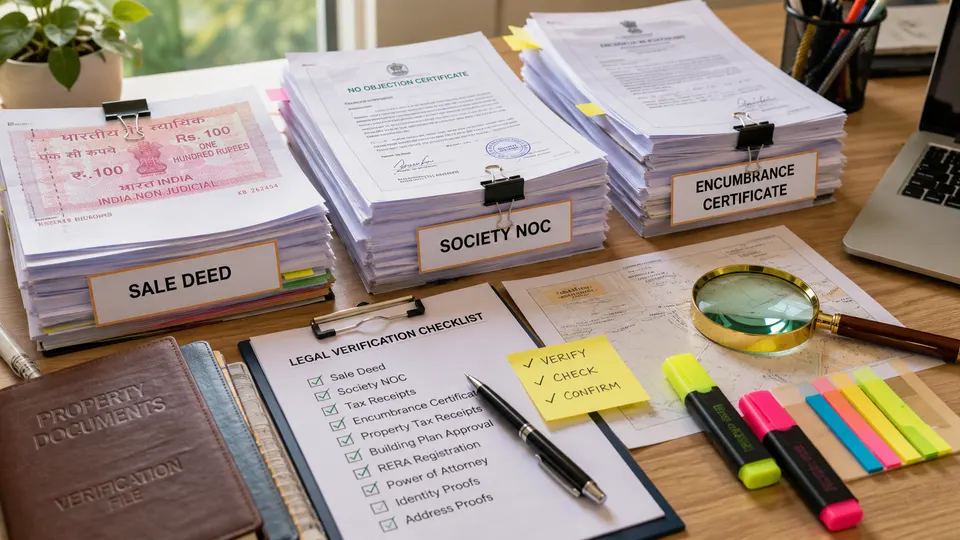
Search the official UP RERA record and compare promoter, phase, declared completion, plans, certificates, updates, and designated payment information with the brochure and cost sheet. Confirm that the unit being offered belongs to that registration. Save dated copies of important disclosures because project information evolves.
Build a delivery-history table
Select several older projects and record promised date, revised date, actual handover, occupancy or completion status, and the condition in which common amenities were delivered. Separate delays caused by broad external events from repeated planning, funding, or execution failures. Ask owners when they could actually live in the home, not only when an offer-of-possession letter was issued.
Visit at least one completed development of similar scale. Inspect façades, basements, lifts, waterproofing, landscaping, fire systems, utilities, and maintenance after the initial sales period. Speak with residents about defect correction and handover documentation. A sample flat cannot demonstrate long-term durability or service culture.
Review complaints with context
Search regulatory orders, court or tribunal records where relevant, public filings, and credible news. Group complaints by delay, quality, refund, area, amenities, maintenance, documentation, or communication. Repeated similar allegations across projects deserve more attention than one unverified social-media post.
Ask the developer specific questions about serious issues and request documents supporting the response. Observe whether representatives answer consistently and provide written evidence. A company that explains setbacks, publishes updates, and closes defects presents a different risk from one that changes the subject or pressures immediate booking.
Assess construction progress and financial signals
Compare site progress with the declared schedule and payment plan. Visit more than once, observe workforce and material movement, and review professional certificates or updates available through official records. Rapid work on a sample zone does not prove equal progress across towers, services, and approvals.
Publicly available financial information may be limited, but buyers can still watch for frequent payment pressure, heavy discounting, stalled contractors, repeated plan changes, unpaid dues reported by credible sources, or dependence on future sales. Do not attempt amateur solvency conclusions; use a lawyer and financial or technical specialists for a high-risk project.
Compare the agreement with the sales pitch
Read the application and agreement before paying a large amount. Check carpet area, total price, escalation, taxes, payment milestones, possession, grace provisions, delay consequences, specifications, parking, amenities, cancellation, refund, defect obligations, and dispute terms. Ask which brochure statements are incorporated.
If a promise matters to the buying decision, record it in an enforceable document. Verbal assurances about view, future access, rental return, free upgrades, or completion cannot safely support a large payment. Have your lawyer explain one-sided clauses and changes proposed by the promoter.
Judge post-possession capability
Delivery is not the end of developer performance. Ask how defects are logged and closed, who maintains the project, how common areas are handed over, what maintenance budget is proposed, and how resident or association transition is handled. Visit occupied projects to see whether lifts, water, backup, security, and landscaping work at scale.
Review whether owners received plans, manuals, warranties, meter details, and possession documents in an organised way. A builder that communicates clearly after sale reduces friction even when defects occur. This service evidence belongs in the track-record score alongside price and launch design.
Builder evaluation checklist
- Verify the legal promoter, phase, and RERA registration.
- Compare promised and actual delivery across several projects.
- Inspect a mature completed project, not only the sample flat.
- Classify regulatory, legal, quality, and service complaints.
- Compare current progress with declared milestones.
- Review the agreement before substantial payment.
- Investigate defect resolution and association handover.
Frequently asked questions
Does a famous brand guarantee timely delivery?
No. Brand history is useful, but each legal promoter, phase, approval, funding situation, and execution team must be reviewed. Verify the exact project independently.
How much weight should online reviews receive?
Use them to identify recurring questions, then verify through residents, official records, site visits, and documents. Both promotional reviews and angry unsupported posts can distort reality.
Is RERA registration a quality certification?
No. It creates a regulatory record and disclosure framework, but buyers must still assess construction, contract, title, finance, and service.
Official resources to verify
Final takeaway
A builder’s track record is the pattern formed by verified deliveries, maintained buildings, transparent records, fair contracts, and responsible problem-solving. Study the exact promoter and phase, then make your purchase depend on documents and evidence rather than brand familiarity.