Quick answer
Before buying a resale apartment, verify the seller’s title and authority, the full ownership chain, encumbrances, approved plans, completion or occupancy status where applicable, society and utility dues, tax records, parking rights, possession, and the sale agreement through an independent property lawyer.
A resale apartment offers valuable certainty: you can inspect the actual home, neighbourhood, building operations, and often the resident community before buying. It also carries a document history. Every prior transfer, loan, inheritance, name variation, unpaid charge, or unauthorised alteration can affect the new buyer.
The safest process keeps commercial excitement separate from legal verification. You can negotiate and express interest, but any token should be governed by a written receipt with clear refund conditions linked to satisfactory title and loan checks. This guide explains the document trail and physical checks to complete before registration.
Confirm the seller and ownership chain
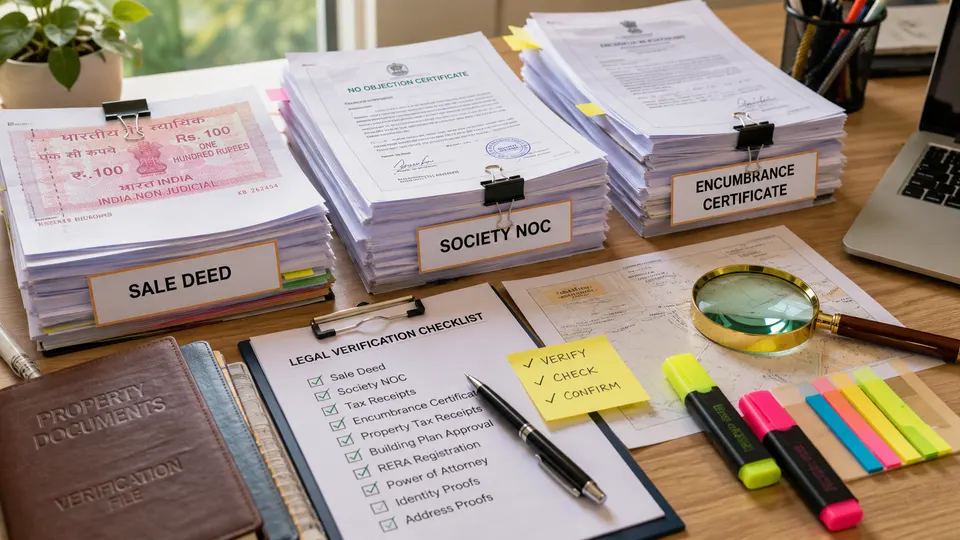
Start with the current title document and trace how the seller acquired the apartment. Review prior sale or conveyance deeds, allotment or lease documents where relevant, possession records, and any mutation or authority records used locally. Names, parentage, unit number, floor, tower, area, boundaries, and ownership share should remain consistent across documents.
If the owner is deceased, abroad, a company, a trust, or represented by a power of attorney, additional evidence is required. Your lawyer should verify succession, probate or legal-heir requirements, board authority, registered power, identity, and the representative’s right to receive money. Do not accept a scanned authority at face value.
Search for mortgages, claims, and litigation
Ask whether the apartment is mortgaged and obtain the lender’s outstanding statement and release process. Registration should be coordinated so the lender is paid correctly and original documents or a formal release are delivered. A seller promising to close the loan “after registration” transfers unnecessary risk to the buyer.
Have the lawyer conduct relevant searches for registered encumbrances, court matters, attachment, acquisition, insolvency, family dispute, and other claims. Also examine the society’s records and speak with management about notices affecting the unit. No single certificate replaces a complete title investigation, especially where older documents or multiple transfers are involved.
Verify building approvals and the delivered apartment
Review the sanctioned plan, completion or occupancy documentation where applicable, and project or authority permissions relevant to the building. Compare the actual unit with the approved plan. Enclosed balconies, shifted walls, merged rooms, terrace structures, or commercial use may require approval and can create financing, safety, or enforcement problems.
For projects covered by RERA, review the official project record and phase. Older completed buildings may involve different documentation, but they still require careful title and approval checks. Ask whether the association or maintenance body has taken over common areas and whether any developer obligations remain unresolved.
Clear society, tax, and utility dues
Obtain a written no-dues or current ledger from the apartment association, maintenance agency, or developer as appropriate. Check maintenance, sinking fund, major repair assessment, parking charges, move-out charges, and transfer process. Ask about approved but not yet billed work because the purchaser may inherit a large expense after registration.
Review property-tax receipts, electricity and water bills, meter details, piped-gas account if present, and any authority ground rent or lease rent. Match account names and meter numbers to the apartment. State in the sale agreement who bears charges up to possession and how later bills relating to an earlier period will be settled.
Inspect condition and price the repairs
A furnished resale home can hide defects. Inspect during daylight and, if possible, after rain. Look for seepage, fresh paint over damp areas, plumbing pressure, drainage smell, electrical load, air-conditioner drains, window sealing, balcony slope, tiles, doors, and pests. Review the external wall, basement, roof, lifts, fire systems, tanks, and common services.
Use a qualified engineer or experienced inspector for a high-value purchase or an older building. Obtain quotations for necessary work and negotiate based on evidence. Clarify which fixtures, appliances, furniture, parking accessories, access cards, and deposits are included, then attach an inventory and condition record to the transaction documents.
Draft the agreement around risk and possession
The agreement should accurately identify parties and property, record consideration and payment timing, state the title assurances, list documents to be delivered, allocate taxes and dues, describe included items, and set the registration and possession process. It should address loan closure, default, refund, indemnity, vacant possession, and consequences if a material representation proves false.
Conduct a final inspection shortly before registration or possession. Verify that the unit is vacant as agreed, condition has not changed, included items remain, dues are cleared, and keys and access devices are ready. Use traceable payments and preserve every receipt. Registration is not the moment to discover that possession or original documents will come later.
Resale apartment due-diligence checklist
- Identity and authority of every seller or representative.
- Complete title chain and property description consistency.
- Mortgage closure and original-document delivery plan.
- Encumbrance, litigation, succession, and insolvency checks.
- Approved plan and completion or occupancy records where applicable.
- Society, tax, utility, and lease-related dues.
- Technical inspection, repair estimate, inventory, and final walkthrough.
Frequently asked questions
Is a bank’s loan approval enough title verification?
No. The lender reviews risk for its own process and may rely on specific assumptions or documents. Engage your own property lawyer to advise you independently and explain any qualification before payment.
Should I pay a token before document review?
Avoid a substantial non-refundable payment before review. If a small token is commercially necessary, use a written receipt that identifies the property and makes refund conditional on satisfactory title, document, finance, and due-diligence results.
What if the seller still has a home loan?
A mortgaged resale can be completed, but payment, lender release, originals, and registration must be coordinated in writing. Your lawyer and lender should structure the sequence so the mortgage is discharged and evidence is delivered.
Official resources to verify
Final takeaway
A resale purchase becomes safer when the physical apartment and its legal history are investigated together. Verify title and authority, clear claims and dues, inspect condition, document every promise, and link money to deliverables. The cost of independent advice is small compared with inheriting a defect in ownership.
Important: Document requirements vary with property type, authority, and ownership history. This checklist is general information and does not replace advice from a qualified property lawyer.