Quick answer
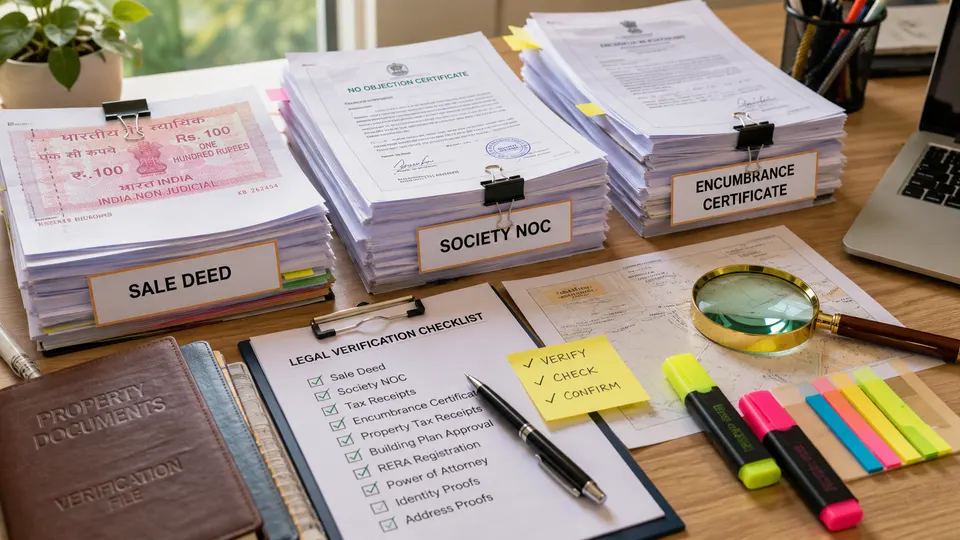
The essential property file proves who owns the asset, whether the seller can transfer it, what exactly is being sold, whether construction and use are authorised, whether money is owed, and whether any mortgage or dispute exists. The exact list varies by property, so an independent lawyer must review originals and official records.
A document checklist is not a box-ticking exercise. Each paper answers a legal question, and documents must agree with one another. A sale deed with a typing error, a plan describing a different unit, or a missing link in the ownership chain can matter more than a thick folder of photocopies.
This guide groups documents by purpose so buyers understand what to ask and why. It applies broadly to apartments, resale homes, and plotted property, but authority rules and transaction histories differ. Never treat an online list as a legal opinion on the specific asset.
Identity, capacity, and authority to sell
Verify government identity, tax identity, address, photographs, and signatures of every owner. Match names and ownership shares with the title documents. If the seller is married, jointly owned, represented, or subject to another person’s rights, ask the lawyer what consents or appearances are required.
Companies, trusts, estates, minors, non-residents, and power-of-attorney transactions need additional authority. Review incorporation or trust records, board resolutions, succession documents, registered powers, and tax or remittance requirements as applicable. The person negotiating is not necessarily the person legally able to transfer title or receive the purchase money.
Title chain and property description
Collect the current conveyance, sale deed, lease deed, allotment, or other title instrument and the prior chain for the period your lawyer considers necessary. Each transfer should connect correctly. Compare plot, tower, floor, unit, area, boundaries, undivided share, parking, and rights in common areas.
Where the property arose through inheritance, gift, partition, conversion, or authority allotment, obtain the supporting instruments and approvals. Mutation and tax records can support the history but do not necessarily create title. Your lawyer should explain gaps, qualifications, and any indemnity rather than simply saying the papers “look fine.”
Encumbrance, loan, dispute, and dues checks
Search relevant registration and court records for mortgages, charges, attachment, litigation, acquisition, insolvency, and prior agreements. Ask the seller for a written disclosure. If a lender holds originals or a charge, coordinate payoff, release, and delivery before or at registration through a documented process.
Obtain current property-tax, maintenance, utility, ground-rent or lease-rent, and authority payment records. Ask the society or maintenance body about no-dues, transfer procedure, major repair assessments, notices, and parking records. The agreement should allocate liability for demands relating to periods before possession.
Land, planning, and construction approvals
Depending on property type, review land title, land-use permission, sanctioned layout and building plan, commencement or construction approvals, and completion or occupancy documentation. Match the delivered home and common areas with approved plans. Unauthorised additional rooms, enclosed balconies, terrace structures, or changed use can affect safety, finance, and future transfer.
For a project covered by RERA, verify its registration on the official UP RERA portal and identify the exact phase. Review available promoter, timeline, plan, certificate, and update information. RERA disclosure is an important source, but independent title and agreement review still remains necessary.
Agreement, payment, and registration records
The agreement should correctly describe the parties, property, consideration, payment schedule, possession, included items, parking, representations, default, refund, indemnity, and document delivery. Do not rely on a brochure, chat message, or side promise that is absent from the contract.
Keep booking receipts, bank advice, tax-deduction records where applicable, loan sanction and disbursement documents, and proof of source of funds. Before registration, review the final deed—not an earlier draft—and confirm statutory payment calculations through current official channels. After registration, obtain the registered copy and preserve an indexed digital archive.
Technical documents and physical verification
Legal papers do not reveal seepage, unsafe wiring, failing lifts, or structural alterations. Arrange a physical inspection and compare measurements, use, fixtures, meters, parking, and access with the documents. For older or high-value property, a qualified engineer can identify repair and safety issues that should affect price or contract conditions.
Complete a final walkthrough immediately before possession. Record condition, inventory, keys, access cards, meter readings, manuals, and defects. The legal description and physical asset must converge; a clean document file for the wrong or altered unit does not protect the buyer.
Core document groups to organise
- Seller identity, ownership share, and authority.
- Current title instrument and complete prior chain.
- Mortgage, encumbrance, litigation, and insolvency searches.
- Land-use, sanctioned plan, and completion records as applicable.
- UP RERA project and phase information where applicable.
- Tax, society, utility, maintenance, and authority dues.
- Agreement, payment evidence, registered deed, and possession inventory.
Frequently asked questions
Can I verify property documents myself?
You can collect and cross-check information, but title interpretation and risk allocation require a qualified property lawyer acting for you. Complex histories, authority leases, inheritance, mortgages, and unauthorised work are easy to misunderstand.
Does an encumbrance certificate prove perfect title?
It is one search result, not a complete title guarantee. Unregistered claims, litigation, possession issues, document gaps, and transactions outside the searched period may require other checks.
Are photocopies enough before booking?
Use copies for preliminary review, but originals, certified records, official searches, and document custody must be verified before substantial payment and closing.
Official resources to verify
Final takeaway
A safe property file tells one consistent story from land and ownership to the exact home being transferred. Collect documents by purpose, verify them independently, reconcile them with the physical property, and make the agreement address every unresolved risk before money changes hands.
Important: This is a general checklist, not legal advice. Required records vary by authority, property type, and ownership history.