Quick answer
Families searching in Greater Noida West should compare school and work travel, healthcare access, carpet area, child and elder safety, water and power reliability, maintenance, occupancy, air and noise conditions, legal status, and complete monthly cost. Visit the exact society during real routine hours.
A family home is an operating base for school runs, work, caregiving, shopping, rest, and emergencies. Amenities matter, but the daily route and dependable services usually shape satisfaction more than a brochure clubhouse. Greater Noida West has many apartment choices, yet road access, occupancy, construction, and management vary between projects.
This checklist helps households compare the practical details before they become emotionally attached to a view or sample flat. It is equally useful for renters, resale buyers, and purchasers considering newer projects.
Test school, work, and care journeys
Drive the work route during peak hours and test the school route around opening or closing time. Ask the school whether its bus enters the society, where children wait, and how long the route takes. Map an alternative route for congestion or construction.
Identify nearby primary care, pharmacy, diagnostics, and a hospital capable of handling emergencies. Check ambulance access to the tower. Families supporting older adults should prioritise step-free movement, reliable lifts, seating, and nearby routine healthcare rather than distance alone.
Inspect the home for real family use
Measure bedrooms, storage, kitchen, utility, dining, study, and furniture circulation. Check privacy between bedrooms, bathroom access for guests, daylight, cross-ventilation, balcony safety, window restrictors, and the ability to supervise young children.
Visit at times when neighbours are home. Listen for lift, corridor, playground, traffic, and construction noise. Check cooking ventilation and afternoon heat. A furnished sample may appear spacious because it uses undersized furniture or omits everyday storage.
Verify water, power, lifts, and maintenance
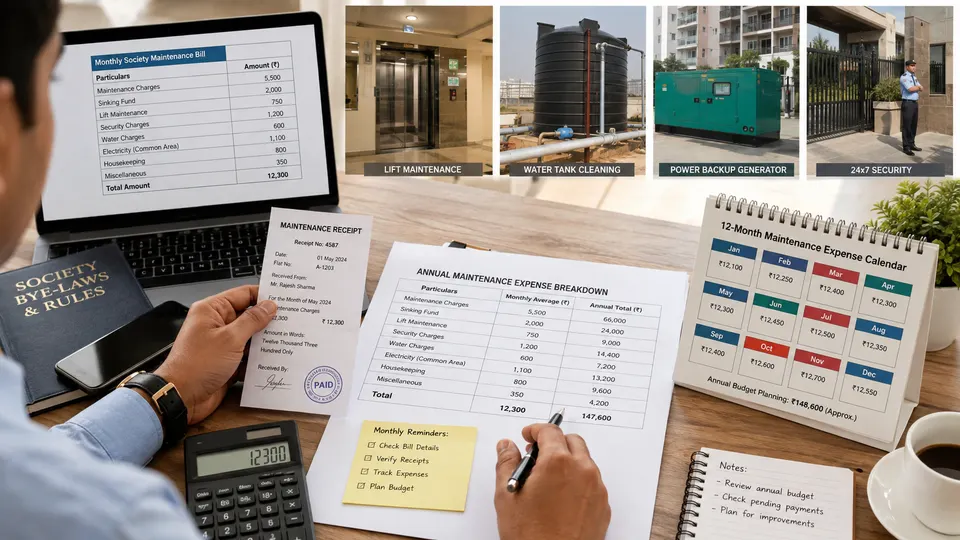
Ask residents—not only sales staff—about water source, pressure, quality, outages, backup, lift downtime, security response, waste collection, pests, seepage, and monsoon drainage. Review a current maintenance bill and what it excludes.
Check occupancy and the maintenance operator’s capacity. A low-occupancy project may look quiet but face service cost or delayed amenity issues. Read resident meeting information where available and ask about planned repairs, dues, handover, and unresolved developer work.
Study the neighbourhood beyond the gate
Walk to groceries, pharmacy, transport, play space, and the main road. Observe crossings, footpaths, lighting, stray-animal management, open drains, dust, and heavy-vehicle movement. Test food and grocery delivery addresses rather than assuming coverage.
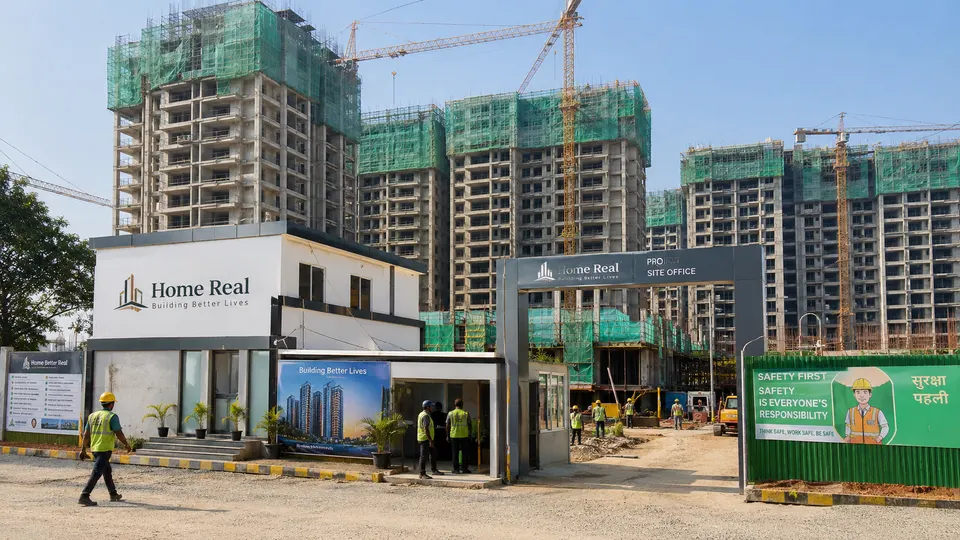
Visit after dark and after rain if possible. Look at ongoing construction and vacant land that may change noise or views. Families should judge the complete approach from the arterial road to the parking bay, not only the landscaped entrance.
Verify documents and possession
Identify the exact project phase and review its UP RERA record where applicable. Use an independent lawyer to check title, approvals, agreement, seller authority, dues, mortgage, and possession documentation. For resale, investigate alterations and society transfer records.
Do not pay for promised school access, future road, view, or amenity unless the relevant right and delivery obligation are documented. Ask when the family can lawfully occupy the unit and what work remains. Align the date with rent, school term, loan, and moving.
Calculate the family’s monthly ownership cost
Combine EMI or opportunity cost with maintenance, utilities, transport, school travel, property tax, insurance, repairs, and furnishing replacement. A cheaper distant home may increase travel time and vehicle cost; a premium location may reduce both.
Keep reserves after purchase. Families experience medical, education, and employment changes, so an EMI that works only in a perfect month is unsafe. Compare the complete household effect rather than maximising the bank’s approved loan.
Trial-run an ordinary weekday before deciding
Visit the neighbourhood at the time the household would actually leave for school and work. Drive the last two kilometres, locate the pickup point, and note unsafe crossings, service roads, congestion, and rain-sensitive stretches. Repeat in the evening when deliveries, visitors, and resident parking compete for space. A ten-minute Sunday visit cannot reveal a weekday routine.
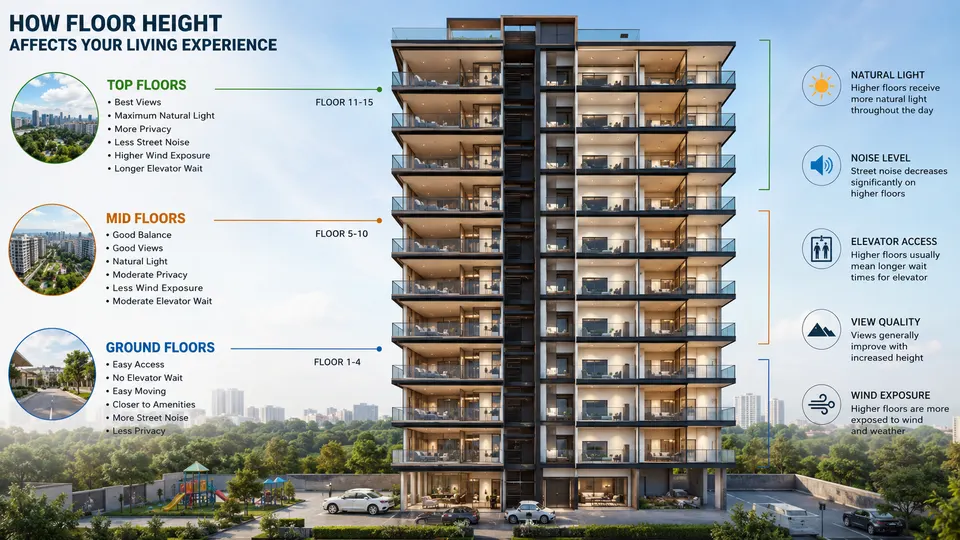
Inside the project, walk the route with the person who would find it hardest: a small child, an older parent, or someone carrying groceries. Time the lift journey, check backup lighting, find an accessible toilet or resting place, and see whether a stroller or wheelchair can move without improvised ramps. Then identify the nearest practical clinic, pharmacy, grocery shop, and open space—not merely the nearest pin on a map.
Finally, spend quiet time inside the exact unit. Listen for lifts, generators, traffic, playgrounds, and neighbouring construction. Observe afternoon heat, privacy from facing towers, and where wet clothes, school bags, shoes, and household supplies would go. Family suitability is the repeated ease of ordinary tasks, not the length of an amenity list.
Family home visit checklist
- Peak-hour work and school route tested.
- Emergency and routine healthcare mapped.
- Room measurements, storage, daylight, and safety checked.
- Water, power, lifts, drainage, and maintenance verified with residents.
- Neighbourhood walked in daylight and after dark.
- Project, title, possession, parking, and dues reviewed.
- EMI plus transport and ownership costs stress-tested.
Frequently asked questions
Which Greater Noida West society is best for families?
There is no universal best. The right society depends on commute, school, budget, household mobility, services, unit condition, and documents. Compare current evidence for the exact tower and unit.
Are more amenities always better?
Only if they are delivered, maintained, affordable, and useful to your family. Basic water, lifts, security, fire safety, access, and management deserve priority.
How many times should we visit?
At least visit during a weekday peak period and after dark; add a daytime unit inspection and a post-rain visit where possible. Different conditions reveal different problems.
Official resources to verify
Final takeaway
A family-friendly home reduces daily friction. Judge the exact apartment, tower, services, route, and legal file as one system. When the essentials work reliably, amenities become a benefit instead of a distraction from avoidable problems.